
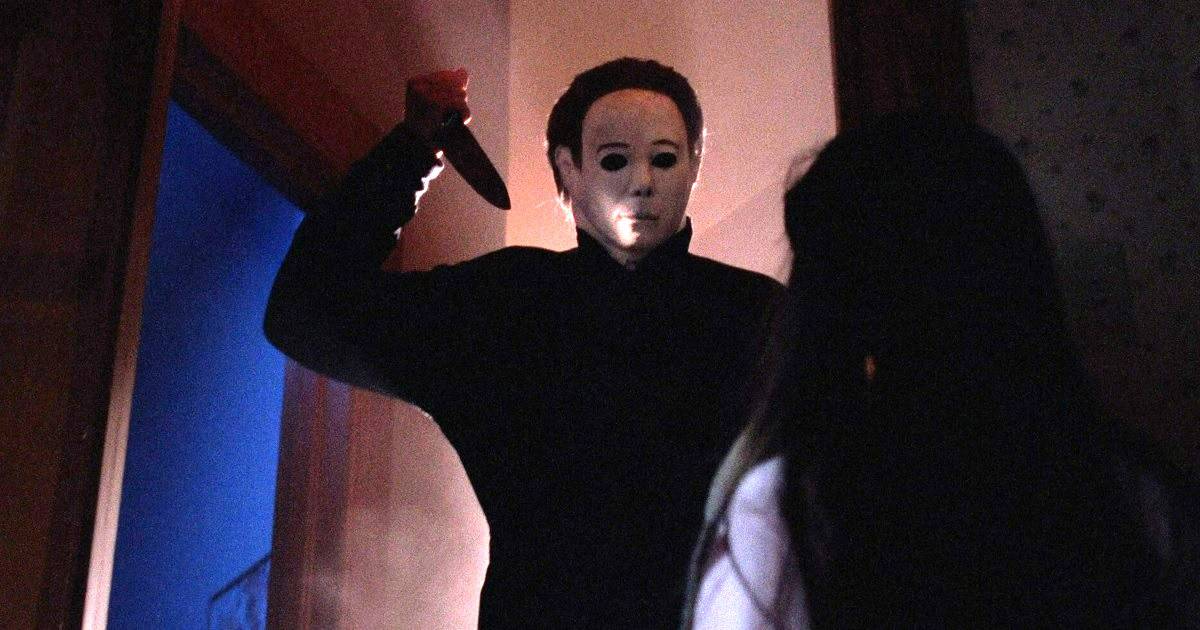

Making a Halloween III without iconic slasher Michael Myers hadn’t worked out very well. The plan had been to turn Halloween into an anthology series – but that plan went down in flames. Fans were disappointed. The Halloween franchise was tarnished so badly, major studios didn’t want to touch it. Michael Myers needed to come back for Halloween 4, and the filmmakers had to make sure his return was a triumphant one. And they did, which is why we’re still getting Michael Myers movies to this day. How did they accomplish their mission? Let’s find out in this episode of What the F*ck Happened to This Horror Movie?
Halloween began when producer Irwin Yablans contacted director John Carpenter about making a movie called The Babysitter Murders. The concept was sold right there in the title: it was going to be about some kind of madman stalking and killing babysitters. The title changed when the decision was made to have the events of the film play out in one night. The night of Halloween. Carpenter wrote the script with his then-girlfriend Debra Hill, who also produced the film alongside Yablans. The madman they created was Michael Myers, who murdered his teenage sister on Halloween in 1963, when he was just six years old. For fifteen years, Myers sits in Smith’s Grove Sanitarium, silent, staring at a wall. Creeping out his doctor Sam Loomis with his intensity. Then he escapes just in time for Halloween 1978. With Loomis following his trail, he returns to his hometown of Haddonfield, Illinois. Where he stalks babysitter Laurie Strode and murders her friends. He almost kills Laurie – but then Loomis shows up and shoots his patient six times. Moustapha Akkad provided the three hundred thousand dollar budget for Halloween, which turned out to be a great investment. Halloween was a huge hit.
So of course everyone wanted a sequel. Everyone except Carpenter and Hill. They wanted to focus on original projects. But Halloween II did present a chance for them to make some money, and they were still owed some cash from the first movie. So they agreed to make a sequel. Legendary producer Dino De Laurentiis had been very impressed by Halloween, so he bought his way into Halloween II and got the project set up at a major studio. Universal Pictures. Carpenter has been very open about the fact that he found it difficult to write the script for Halloween II. He realized there wasn’t any more story to tell. So he just had Michael Myers continue going after Laurie Strode on Halloween night 1978. Following her to the hospital, where he proceeds to slash his way through the staff. Carpenter was so desperate to get some kind of substance into the story, he even dropped in a twist. Which he now regrets. A twist that reveals the acts that appeared to be random in the first movie weren’t random at all. Michael was specifically targeting Laurie because she is his long-lost sister and he wants to kill her just like he killed their other sister in 1963. Carpenter didn’t direct Halloween II himself, he gave first-timer Rick Rosenthal the chance to bring this one to the screen. Then handled some reshoots himself to enhance the shocks and scares. And in the end, he tried to make sure he would never have to worry about Michael Myers again by having both the slasher and Doctor Loomis get caught in an explosion. There’s no way they’d be coming back from that.
But Halloween II was a hit, and Dino De Laurentiis had it in his contract that he could produce another sequel. Carpenter and Hill agreed to shepherd Halloween III to the screen, but not as a Michael Myers slasher movie. That story really was over now. Their idea was to turn Halloween into an anthology franchise, a series of movies that would only be connected by the fact that they’re set on Halloween. The first movie’s production designer Tommy Lee Wallace was hired to direct and rewrite a script that was written by the uncredited Nigel Kneale. The result was the madness of Halloween III: Season of the Witch. The story of a toymaker who harnesses the power of Stonehenge to turn Halloween masks into deadly weapons. On Halloween night, any kid who watches a commercial for his company Silver Shamrock while wearing a Silver Shamrock mask will be killed. The mask will turn their heads into a pile of bugs and snakes. Halloween III is considered a cult classic now, but it made substantially less at the box office than its predecessors had. Fans were not happy to receive a Halloween movie without Michael Myers in it.
Halloween III marked the end of the deal with Dino De Laurentiis and Universal. And after seeing their anthology idea fail, Carpenter and Hill were done with Halloween as well. But they weren’t the only ones making decisions for the franchise. Yablans and Akkad were both still rights holders as well, and they continued pushing for another sequel. One that would get the series back on track. Halloween was a lucrative property, they couldn’t just sit on it. But years went by without Carpenter or Hill showing any interest in making a sequel, and the rights holders all had to be in agreement to get a new movie into production. Then Cannon Films offered Carpenter a multi-film deal with the condition that one of the movies he’d make for them would be Halloween 4. So he took the deal and hired Dennis Etchison, who had written the novelizations of Halloween 2 and 3 under the name Jack Martin, to write the script. They knew Michael Myers would have to be brought back in order for the film to be a success. The question was, how could he return?
Etchison’s idea was to turn Michael Myers into a supernatural force. The human side of him was dead, burned away. But the evil spirit that lived within him was still around. It feeds on fear, and is brought back into the world because the adults of Haddonfield are still so afraid of Michael Myers. They banned Halloween after what happened in 1978, but as the tenth anniversary approaches their kids are desperate to celebrate the holiday again. An all-night horror movie marathon is set up at a drive-in just outside of town. And that event is crashed by this supernatural version of Michael Myers, who wears a black T-shirt and a black coat instead of the usual coveralls. He kills everyone at the drive-in marathon while they sit in their cars. When the police show up and open fire on the slasher, it doesn’t take him down. It makes him more powerful. And taller. Michael gets bigger and bigger as the bullets hit him, growing to a height of twelve feet. But then he gets caught in an explosion again, and that gets rid of him. Carpenter worked closely with Etchison as he wrote multiple drafts of his script full of strange events and trippy nightmare sequences. He contacted The Howling director Joe Dante about taking the helm. There was a chance Halloween 4 was going to start filming in April of 1987. But while Carpenter was happy with the approach Etchison had taken to the story, there were others who were not. Namely, Yablans and Akkad. They wanted Michael Myers back, but without this supernatural baggage. They wanted him to be a flesh and blood killer like he was in the first two movies. So they blocked Etchison’s version of Halloween 4 from happening.
That was the last straw for Carpenter and Hill. They decided to sell off their stake in the franchise… and their share was purchased by Akkad. Who also bought Yablan’s share of the rights. Akkad was now in complete control. And a Halloween 4 that would be more along the lines of the first film in the series was on the fast track. At this point, five years after the release of Halloween III, Hollywood studios didn’t have any interest in producing or distributing a new sequel. So Akkad would produce and distribute HHalloween 4 himself, through his company Trancas International. An open call was put out for story pitches. Anyone could bring a Halloween 4 idea to Trancas, whether they were in the Writers Guild or not. Submissions came pouring in. As revealed in the book Taking Shape II: The Lost Halloween Sequels by Dustin McNeill and Travis Mullins, one script that was submitted had Michael Myers going after Laurie Strode in Chicago. That script, by Daniel Kenney and Marc Allyn Medina, found that Laurie was married and had a daughter. She was working for a magazine, putting together an article on a famous rock star. And when Michael returns, he kills the rock star, steals a leather outfit from his closet, and goes joyriding in his Porsche.
That script was rejected because Jamie Lee Curtis wouldn’t be reprising the role of Laurie Strode. The winning script was sent in by Dhani Lipsius, Larry Rattner, and Benjamin Ruffner. Those writers delivered exactly the sort of set-up Akkad wanted to see: a sequel that would echo Halloween 1. This time, Michael Myers would escape from a sanitarium ten years after the events of the first two films – and since Laurie has passed away, his new target would be her young daughter. Doctor Loomis would once again be on Michael’s trail, with Donald Pleasence on board to play Loomis for the third time. And there would be a twist ending in which Michael’s young niece – after surviving a night of being pursued by her homicidal uncle – attacks someone with a knife herself. Akkad was confident that the Lipsius, Rattner, and Ruffner script was a solid foundation for Halloween 4. It just needed a bit more work.
Playwright Shem Bitterman was hired to do a rewrite of the script. And Bitterman brought some twisted ideas to the table. In his version of the script, Michael’s niece isn’t afraid of him. She thinks she’s misunderstood and wants to play and bond with her uncle. Like the script written by Kenney and Medina, this one had Michael pairing his iconic mask with a wardrobe change. But in this case, his stolen clothes were from a priest who picked him up hitch-hiking. In the finished film, it’s Doctor Loomis who gets a ride from a man of God. Bitterman’s revision didn’t make it to the screen, but he would get another chance when he was hired to work on Halloween 5 the following year. Some of the ideas he originally had for part 4 did end up in the next sequel.
The job of directing Halloween 4 went to Dwight H. Little, who was a fan of the franchise and had his agent pursue the gig for him. Little’s movies KGB: The Secret War and Getting Even hadn’t made much of an impact, but he had just finished filming an action adventure movie called Bloodstone. He was able to bond with Akkad over that one, because it reminded Akkad of a film he had made himself, The Lion of the Desert. Little also had the vision Akkad wanted for Halloween 4. He wanted to try to bring back the style and tone of the first movie, while also making sure the film would have the proper Halloween atmosphere. Little was from Ohio, so he knew exactly how a Midwestern Halloween should look and feel on screen. He wasn’t satisfied with the Lipsius, Rattner, and Ruffner script, though. It’s not clear if he ever saw the Bitterman drafts, but he knew who he wanted to have work on the script. His friend and fellow Ohioan Alan B. McElroy.
McElroy was hired to rewrite Halloween 4 on February 25th, 1988. And he was in a tough spot. Not only was the movie set to start filming in April, but the Writers Guild was going to go on strike as of March 7th. As a member of the guild, McElroy wouldn’t be able to work on the script past that date. So he knocked out his version of the script in just eleven days. His rewrite was so substantial, he receives the sole screenplay credit on the finished film, and also shares story credit with Lipsius, Rattner, and Ruffner.
As far as Carpenter was concerned, Michael Myers was burned down to ash at the end of Halloween II. But Halloween 4 tells us that he made it out of the hospital alive. He was so severely burned that he has been in a coma for the last ten years. In that time, Laurie Strode has gotten married and had a daughter named Jamie. Sadly, Laurie and her husband were both killed in a car accident around the end of 1987. Jamie, who is said to be seven years old, now lives in Haddonfield with the Carruthers family and has a teenage foster sister named Rachel. It’s common knowledge that Jamie is the niece of the infamous Michael Myers. She’s teased and bullied at school for being an orphan, and the fact that her uncle is the boogeyman. Although she shouldn’t know what her uncle looked like while wearing a mask and carrying a knife, she has recurring nightmares about him. She calls him the Nightmare Man. But as Halloween 1988 approaches, she wants to celebrate the holiday like any other kid in town. She wants Rachel to take her trick-or-treating, since their parents will be attending a party that night. And when it’s time to get a costume, she just happens to pick a clown costume, like Michael was wearing when he killed his sister in 1963. Unfortunately, Michael returns to ruin Jamie’s holiday fun. The head of the Ridgemont sanitarium he has been in for ten years decided Halloween Eve would be the perfect time for a patient transfer. He’s sending Michael back to Smith’s Grove, the sanitarium he escaped from in 1978. But in the midst of the transfer, the medics make the mistake of mentioning that Michael has one living relative. A niece living in his hometown. That wakes him from his coma and he escapes. Once Doctor Loomis hears about the escape, he knows exactly where Michael is going. He follows – but is slowed down by some car trouble. Because Michael causes his car to explode when they cross paths at a gas station. Other versions of the script had Michael keeping his classic mask but getting a wardrobe change. The Halloween 4 that was made puts him back in coveralls, which he steals from a mechanic at the gas station.
When Loomis reaches Haddonfield, thanks to a ride from a drunken reverend, he enlists the help of the local sheriff. While Etchison’s draft called for Sheriff Brackett to return from the first two films, the final draft tells us that Brackett retired and moved to Florida. The sheriff in Haddonfield now in Ben Meeker. But just like Brackett in the first movie, Meeker has a teenage daughter who is going to end up becoming one of Michael Myers’ victims. Kelly Meeker also happens to be in a love triangle with Rachel Carruthers and Rachel’s boyfriend Brady. Who works at the pharmacy Michael steals his fresh mask from. Loomis, Meeker, and Rachel do their best to keep Jamie safe from her uncle. Which is quite difficult to do, given that Michael is even able to massacre the entire Haddonfield police force. With no more cops around other than Meeker, Loomis stirs up a vigilante mob in hopes they’ll be able to stop Michael. Jamie is taken to the Meeker home, where the doors are locked and the windows are nailed shut. They don’t realize Michael is already in the house with them. More murder and chase sequences ensue.
It’s impressive that McElroy was able to write the script so quickly, but he did have the foundation of an existing script to work from. And it was also a benefit that Halloween 4 is basically a reworking of the first movie. They just had a five million dollar budget to work with this time instead of a three hundred thousand dollar budget. So while there are moments in part 4 that are similar to part 1, they play out in a bigger, flashier way. For example, in the first movie we see that Michael got his coveralls from a tow truck driver. Loomis finds his hospital gown at the tow truck, and the driver’s corpse is laying on the ground nearby. In part 4, we see Michael kill the mechanic he gets the coveralls from. Loomis shows up to find the mechanic’s corpse and other dead bodies. He fires some shots at Michael. Then Michael speeds away in a tow truck and causes the gas station to explode on his way out. Another example: at the end of part 1, Loomis fires six shots into Michael, knocking him off a balcony. In part 4, Meeker and state police open fire on Michael with handguns and a shotgun, knocking him into a well.
Pleasence liked the script for Halloween 4 and agreed to reprise the role of Loomis early on. He told Fangoria magazine that he decided to be in the movie not only because he was available and the money was good, but because “The story of Michael and Loomis continues to be a very good one. The series could have easily turned into a pointless exercise in moneymaking and greed, but the script is very good and care has been taken with the development of the characters.”
Dwight H. Little built a strong cast around Pleasence. While future Sabrina the Teenage Witch star Melissa Joan Hart auditioned for the role of Jamie, it ended up going to Danielle Harris, who turned eleven during filming. The child actress delivered such a good and endearing performance, Harris still has a big following in the horror community and is considered to be a genre icon. Rebecca Schaeffer, who would be tragically murdered by a stalker in 1989, was up for the role of Rachel Carruthers. But Little cast Ellie Cornell, who turned Rachel into a fan favorite character. Sasha Jenson was cast as Rachel’s boyfriend Brady. Kathleen Kinmont as Kelly, Rachel’s rival for Brady’s affections. Beau Starr plays Sheriff Meeker. The role of Michael Myers initially went to stuntman Tom Morga, who had previously played Jason Voorhees and Roy Burns in Friday the 13th: A New Beginning and Leatherface for a moment during the first kills in The Texas Chainsaw Massacre 2. But his time as Michael Myers didn’t go smoothly. Scenes shot with Morga can be seen in the finished film. When Michael kills the mechanic and causes trouble for Loomis at the gas station, that’s Morga. That’s him when Michael impales Kelly with a shotgun. And when he scares Jamie in the pharmacy. When Loomis tries to hide with Jamie in the schoolhouse and Michael attacks him, that’s also Morga. Some have said that Morga was fired from Halloween 4 because Akkad didn’t like his performance. But in the school scene, you get a hint at another reason. It’s tied into why the mask looks so strange when Michael attacks Loomis.
The original Michael Myers mask was a modified William Shatner mask from Don Post Studios. So when going into production on Halloween 4, makeup technician Ken Horn ordered a batch of six modified Shatner masks from the company. But when the masks showed up on set, they didn’t look like Michael Myers. They were pink and had white hair. As you can still see in the school scene. So Horn had to paint the masks white and dye the hair. On the set one day, a producer told him to do another modification before they shot the scene. He wanted the eyeholes to be made bigger. Horn explained that it couldn’t be done in the middle of filming because the mask would need a paint touch-up after the modification. If Morga put the mask on while the paint was fresh, it would knock him out. Morga backed him up on this. And the situation blew up into an argument that ended with Horn and Morga being fired. Luckily for Horn, a Fangoria journalist he was friends with was on set at the time and demanded that Horn be re-hired. Morga wasn’t so lucky.
So a call went out for someone big to play Michael Myers, and that call was answered by George P. Wilbur. He hadn’t seen the first two Halloweens yet, but he caught up on them and gave himself a crash course on how to move as Michael. Once he got on set, some extra bulk was added to his frame with hockey pads that he wore under the coveralls. In the movie we get a mixture of Wilbur and Morga – but it’s Wilbur playing Michael during some of the most famous scenes. Like the sequence where he chases Jamie and Rachel through the Meeker house and up onto the roof. This wasn’t as dangerous as it looks, because Wilbur and the actors weren’t really on top of a house. The roof was built in an open field, the gutters close to the ground, and the highest point was still under twenty feet. But Cornell got injured filming the roof chase anyway when a nail cut into her torso. This sequence was written as being even more intense in the script, as the Meeker house was supposed to be on fire by the time the characters are up on the roof. But the fire aspect of the roof chase was removed on the way to filming. The school chase was also more involved in McElroy’s script. There was supposed to be a moment where Jamie hides under a desk in a classroom. Michael can’t find her, so he starts flipping all of the desks over. While that didn’t make it into Halloween 4, the idea was used ten years later for a scene in Halloween H20.
Makeup technician Ken Horn ran into another complication on set when Pleasence watched some footage. Since Loomis was caught in the same hospital fire that put Michael into a coma, the character now has a burn scar on his face. And the actor was appalled to see that the first design of the scar made it look like he had a fried egg on his face. So the scar was re-designed and changes throughout the movie, depending on when the scene was shot.
Moustapha Akkad was not a fan of gore in movies, and he wanted Halloween 4 to have less bloodshed than part 2 had. Even though this sequel has a higher bodycount, he thought the kills should be presented in the same way as in the first movie. When Fangoria was on set, part 4 was hyped up based on two selling points: it had a twist ending, and there would be no gore. Well, the twist ending remains intact. The film does end with Jamie – seeming to be under the influence of Michael in some way – picking up a pair of scissors and stabbing her foster mother. To the horror of everyone, especially Loomis. But there did end up being more gore than was originally intended. Audience response from a test screening indicated that viewers felt the movie wasn’t edgy enough. They wanted to see more carnage. So the filmmakers did what they could to deliver that. Additional dates of filming were scheduled so extra blood could be supplied by FX artist John Carl Buechler, who directed Friday the 13th Part VII: The New Blood and worked on A Nightmare on Elm Street 4: The Dream Master this same year. So when you see Michael stick his thumb into someone’s forehead, or tear open the neck of a man who’s giving Jamie and Rachel a ride, you can thank Buechler and the test screening audience for that.
Halloween 4 had plenty of hurdles to clear on its way to the screen. But the end product was worth all of the trouble. This movie was exactly what it needed to be. A simple stalk-and-slash story that brought Michael Myers back just the way he was before. Laurie Strode wasn’t present, but Little and McElroy introduced us to some interesting new characters. People we could root for and care about. And they gave Pleasence a chance to dazzle us with another awesome Dr. Loomis performance. While the follow-ups to this film would get bogged down with unnecessary mysteries and supernatural elements, Little wanted his movie to be the straightforward story of a flesh and blood maniac wreaking havoc on Halloween night. He explained the logic of the film’s version of Michael Myers to Starburst magazine, “The reason he got out of the ambulance is because we needed to get him free. The reason he goes to the diner and kills the mechanic is so he can get his outfit, his coveralls. The reason he blows up the gas station is so that we can take down the telephone lines. The reason he goes to the drug store is so that he can get his mask. The reason he throws Bucky into the powerlines is so that we can knock the power down in the town. We wanted to make everything about his slow approach to Haddonfield. We wanted everything to be believable. We didn’t want it to be tongue-in-cheek.”
Halloween 4’s effectiveness is enhanced by the fact that Little really was able to capture the look and feel of a Midwestern Halloween on film. Even though the movie was shot during the spring, it’s convincing as Halloween. The decorations. The fallen leaves, which were spread around the set by greenskeeper Mike Lookinland – who is better known for playing Bobby Brady on The Brady Bunch. The pumpkins, some of which were painted squashes since pumpkins weren’t available at the time. The movie was shot in Utah, which helped with the small town Midwestern feel. The previous movies had been shot just outside Los Angeles. One of the most popular things about Halloween 4 is the opening title sequence, which immediately envelops the viewer in Halloween atmosphere. Even fans of the franchise who aren’t so fond of Halloween 4 will admit that the opening montage is a thing of beauty.
In his audio commentary, Little revealed that the idea behind showing these images – Halloween decorations in rural areas, shots of farmland – was meant to be a nod to the origins of the holiday. “We were trying to get to the idea of what Halloween was and how that holiday began. We started going through all these books and research materials and realized that it was part of an agrarian tradition. Starting in New England at the end of the harvest season. When the crops were all harvested and winter was coming. It was kind of a macabre festival. So we found these agricultural images and we wanted to go back to the roots of the Halloween tradition.” But even if you don’t know the reasoning behind these shots, they’re still great to look at.
Not long after this sequence is done, the theme music kicks in and we’re fully immersed in the return of Michael Myers. John Carpenter had composed the scores for the previous films, but he had washed his hands of the Halloween movies by now. So the filmmakers got the next best composer they could find: Alan Howarth, who worked alongside Carpenter on several of his movies. For the three films that make up the Jamie Lloyd trilogy, Howarth kept the Halloween sound alive in Carpenter’s absence.
Michael Myers himself had been absent for most of the ‘80s, and movie-goers gave him a warm welcome when he came back in 1988. Halloween 4 made almost eighteen million dollars at the box office, over three times the budget Akkad had put into it. It was so successful, Halloween 5 was immediately given a greenlight. Part 4 was released on October 21st, 1988, and Halloween 5 was in theatres less than a year later, on October 13th, 1989. That one wasn’t as well-received as 4 was… but that’s a story told in a different episode. For now, let’s just celebrate the success that Little, McElroy, and the cast and crew had with this sequel. They were tasked with bringing an icon back to the screen, and did so with a well-crafted movie that many fans love and continue to enjoy to this day, more than thirty years later. Michael Myers made his return – and it was so triumphant, it has allowed him to come back many more times.
A couple of the previous episodes of the show can be seen below. To see more, head over to our JoBlo Horror Originals YouTube channel – and subscribe while you’re there!





The comment section exists to allow readers to discuss the article constructively and respectfully, focused on the topic at hand.
What’s Not Allowed